2-6

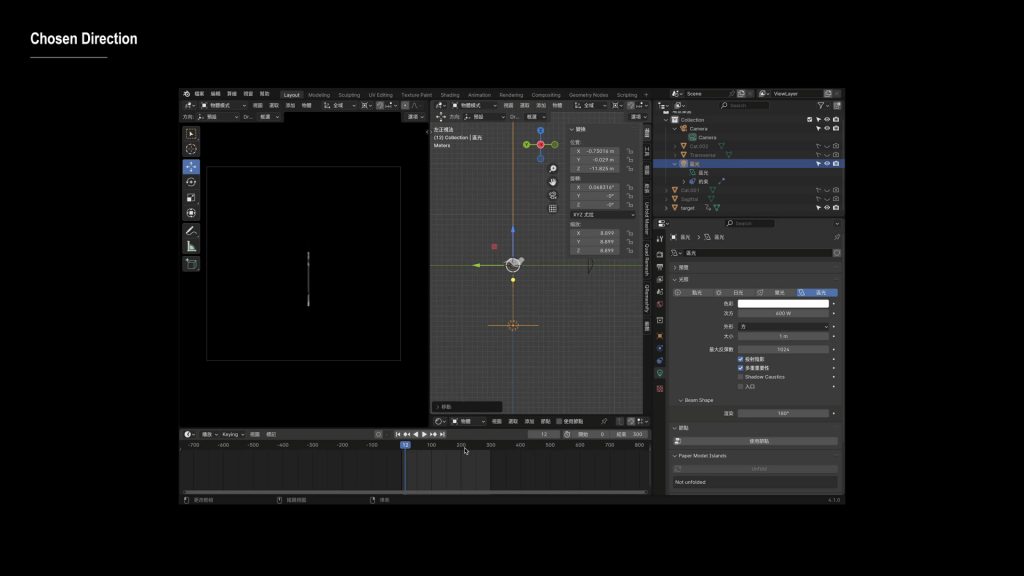
- Draft- P1-2 – Chosen Direction
- So for this project, I decided to continue with the first direction of my research.
- This direction is about working inside a 3D system,
- but intentionally producing images that can feel almost two-dimensional.
- Instead of trying to make things look more realistic or more 3D,
- I’m more interested in moments where depth exists in the system,
- but becomes unstable or uncertain in perception.
- Video available
- Draft -P3- Container & Line of Inquiry & Written Response Draft 3
- (start by showing my container video,)
- and then briefly talk about my main question.
- The question is:
- How does three-dimensional perception emerge from a fundamentally two-dimensional image?
- Even though videos and screens are completely flat, we still tend to see them as spatial and volumetric.
- So this project looks at how motion, rotation, and visual simplification
- can either trigger that sense of depth, or make it collapse back into something flat.
- Video available
- Draft- P4 – Experimental Setup
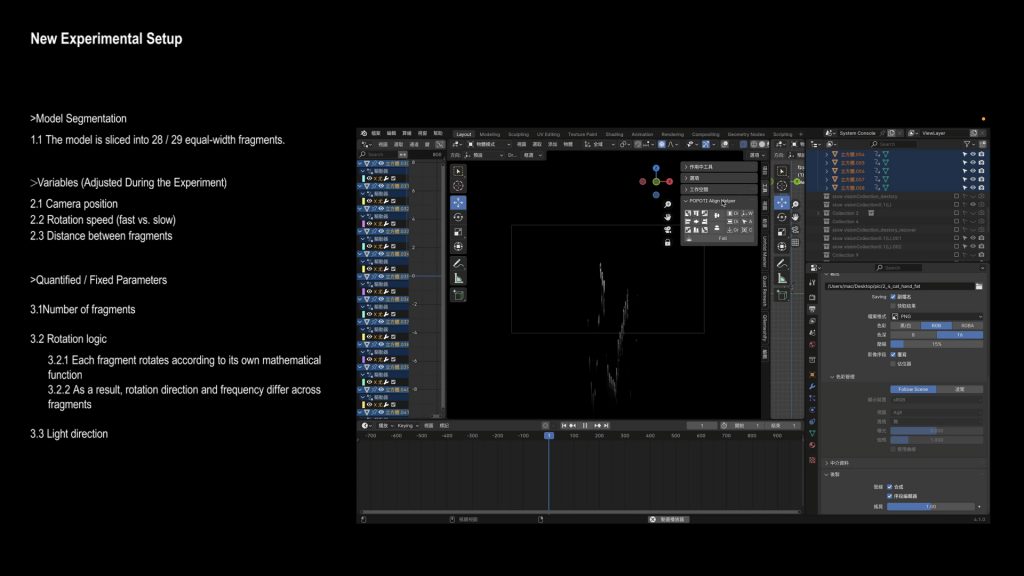
- On this page, I’m showing my experimental setup.
- I worked with a few main variables: the distance of the camera, the rotation speed, and the distance between each fragment.
- At the same time, some things were kept fixed. For example: the number of fragments, the rotation logic —each fragment follows its own equation,
- so their directions and frequencies are all different, and the direction of the light.
- This way, I could focus on how changes in motion and spatial relationshipsaffect how depth is perceived.
- Video available
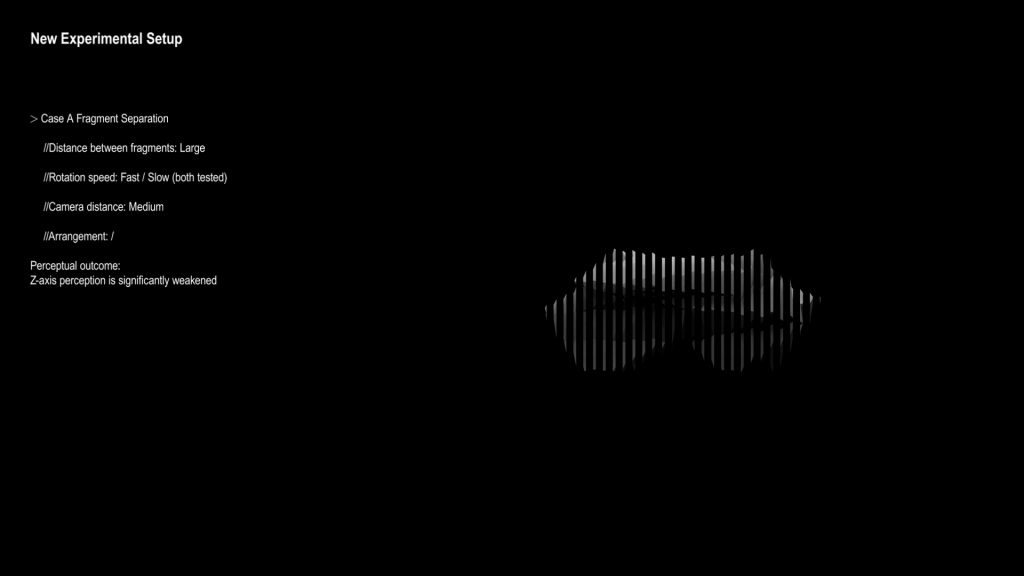
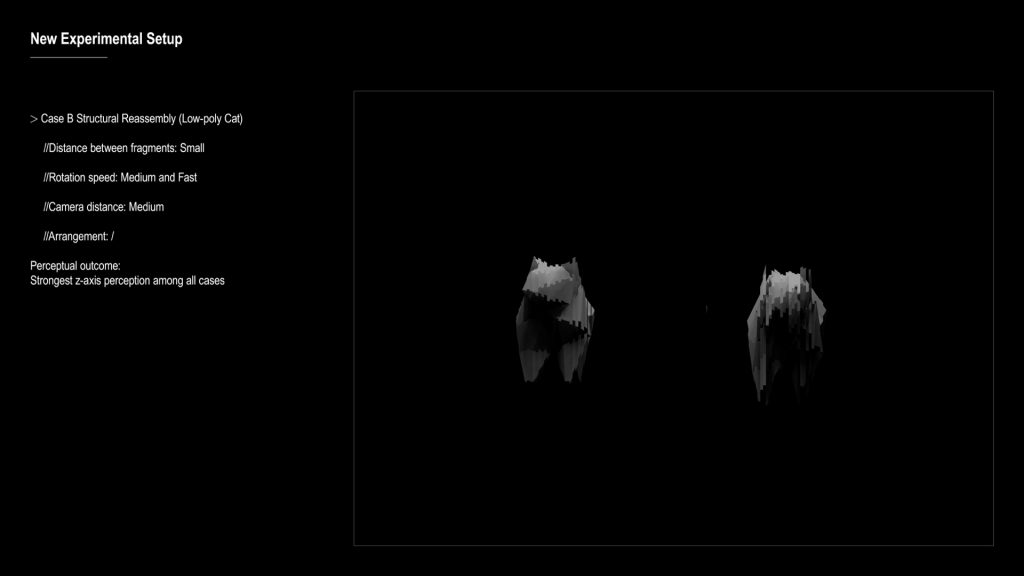
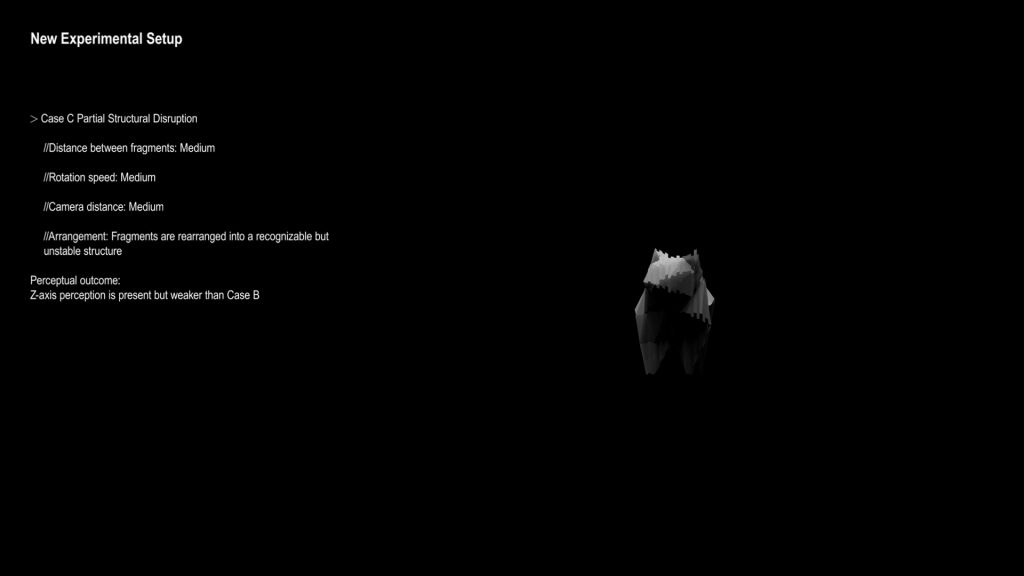
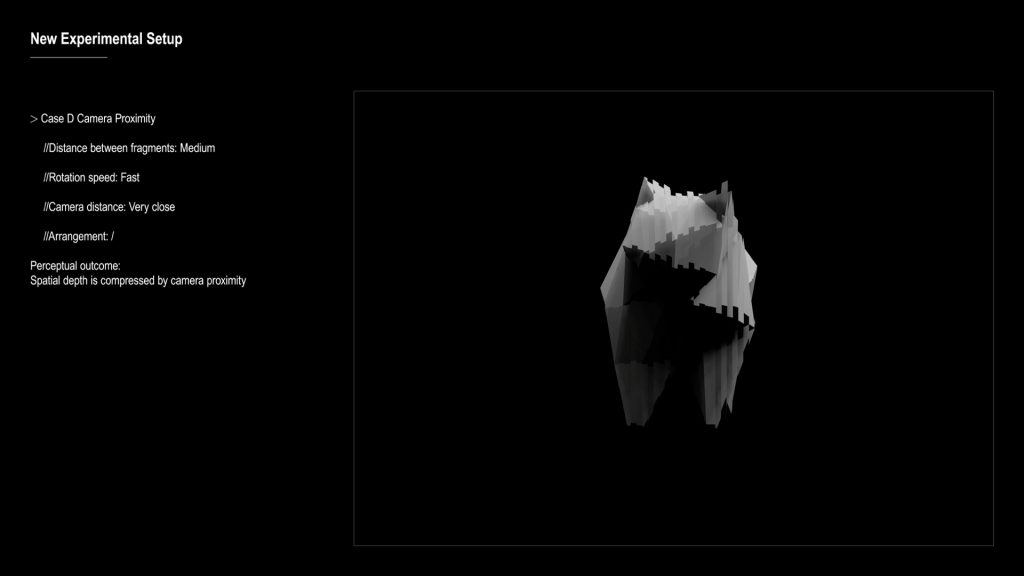
- Draft- P5-7 – Presentation of the Four Cases
- Video available

- Draft- P8 – Comparing the Four Cases
- Here, I compare these four cases.
- I’m not really asking which one looks better, but rather which one feels the most three-dimensional.
- More specifically, in which case does the z-axis feel the strongest, and in which cases does it almost disappear?
- What I noticed is that depth doesn’t just switch on or off.
- It gradually changes depending on structure, spacing, and how the camera is positioned.
- Draft- P9 – Visual Difference
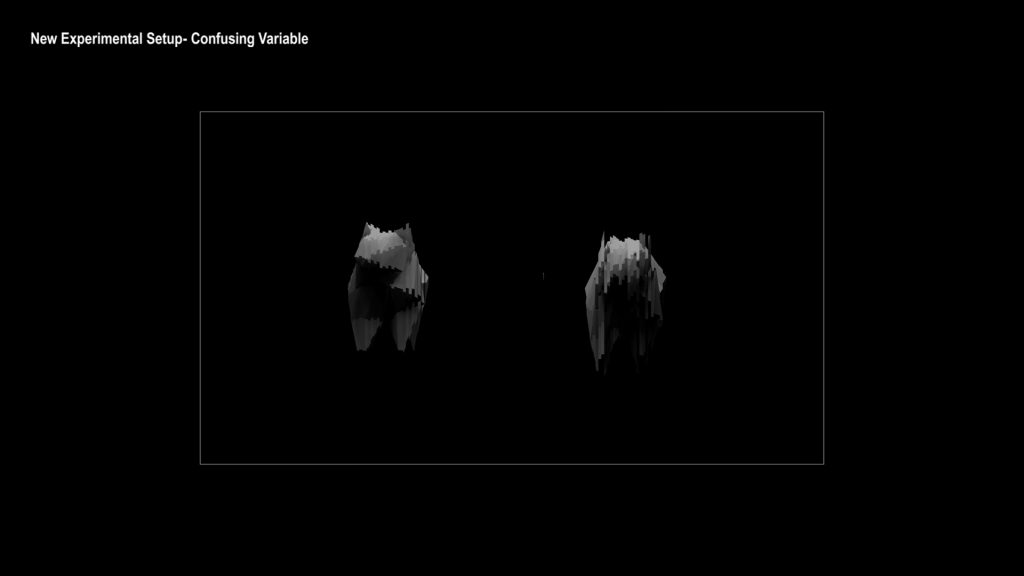
- After that, I tried to explore another direction.
- This part actually took a lot of time, but it ended up being a failed attempt.
- Here, I’m showing what the two results look like visually.
- Video available
Draft- P10 – Visual Difference
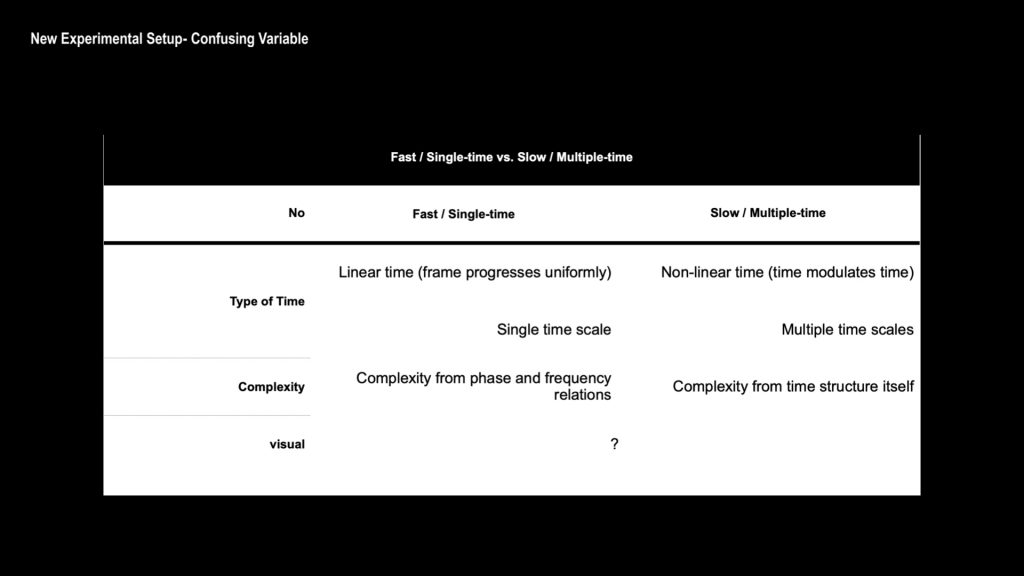
- Even though these two videos look similar at first, they’re actually driven by very different time structures.
- The first one rotates very fast, but it’s controlled by a single time constraint.
- The second one rotates more slowly, but it uses overlapping time lines.
- However, when I look at them visually, I couldn’t find a clear or consistent perceptual difference between the two.
- Draft-P11-Explanation of formulas
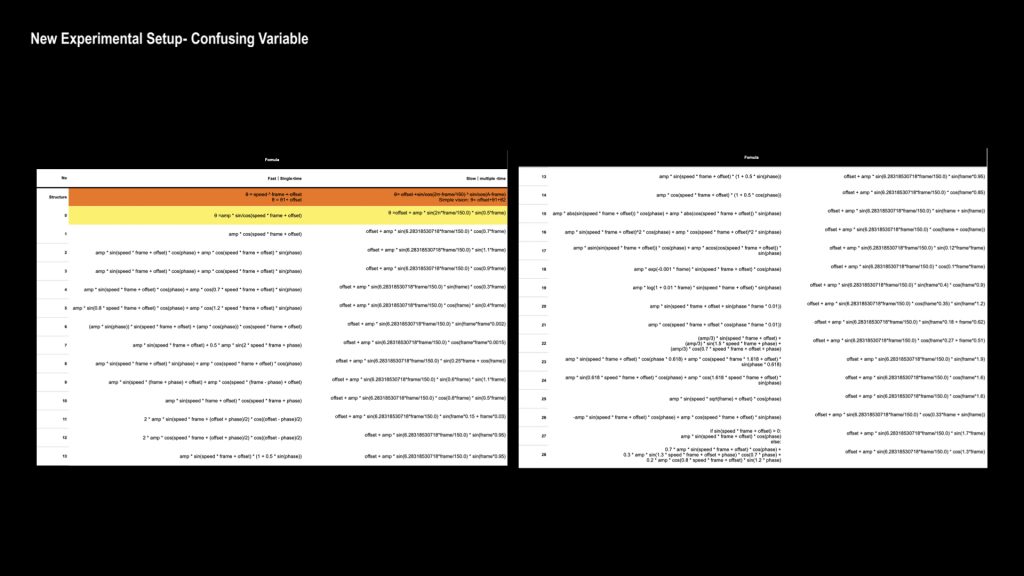
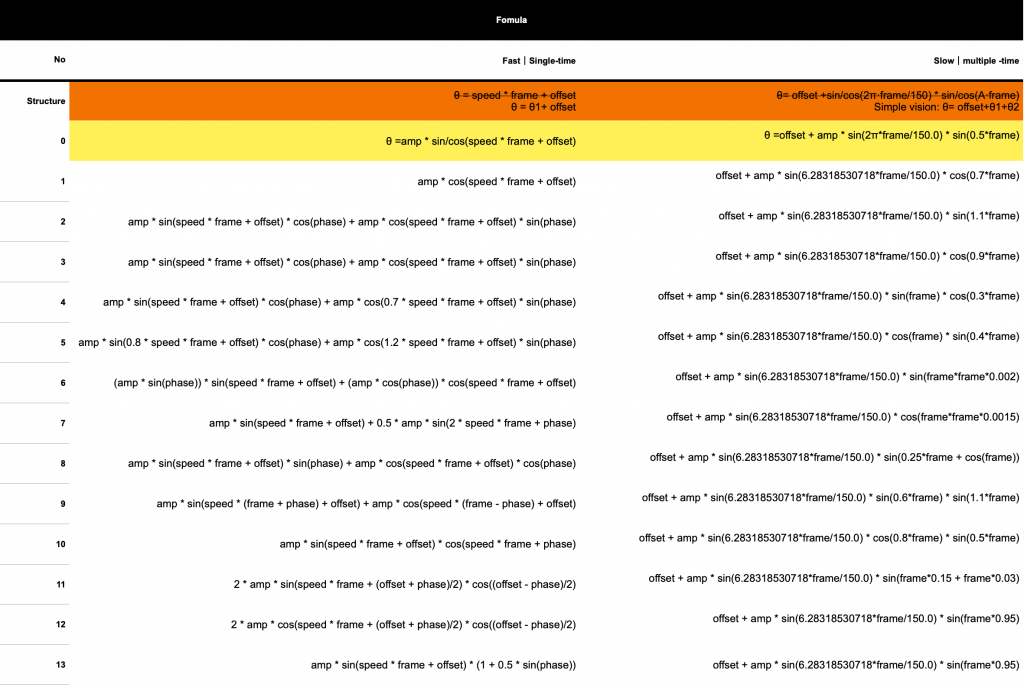
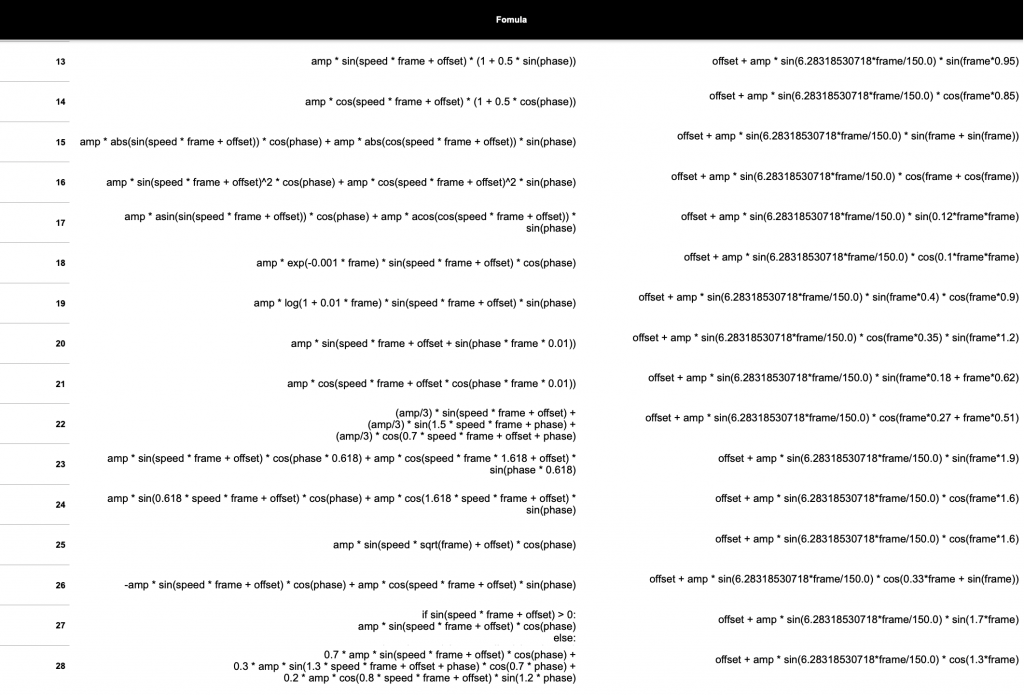
- First, these two sets of formulas share the same requirements and common characteristics. They both need to rotate through 360 degrees, and the direction of each slice is different — meaning the rotation can be either positive or negative. Also, all variables in both formulas have the same range, and they are required to coincide at a specific point, for example at the 300th needle or the 150th needle.
- The difference between the two formulas lies in their logic.
- For Single Time, the idea is that the rotation angle is calculated by taking the rotation value and adding an offset. So in the formula, the frame is used to control the rotation angle, while the offset controls the deviation, and in the end these two values are added together to get the final angle.
- For Multiple Time, the logic is different. The rotation angle is controlled by two angles instead of one, and then an offset is added on top of that. That’s why, in the formula, apart from the offset, the other variables are multiplied together. This represents the fact that I’m using two angles as control parameters for the rotation. The actual rotation angle is jointly determined by these two angles.
- So in terms of time, the Multiple Time setup effectively has two timelines: one timeline is controlled by the first variable, and the second timeline is controlled by the second variable.
Leave a Reply